NEWS CENTER
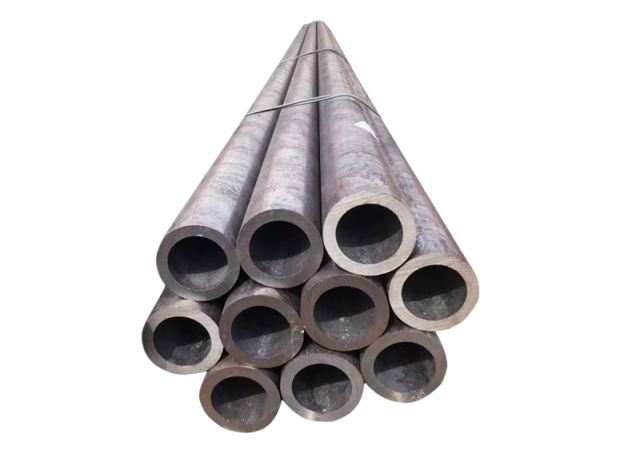
"Stainless steel" actually rusts:
Cold knowledge: The name "stainless steel" is misleading. It is not absolutely rust-free, but it is very difficult to rust. In certain environments, such as exposure to salt spray (seaside), strong acids, strong alkalis, environments containing chlorides (such as snow-melting salts), or contact with other metals to cause electrochemical corrosion (galvanic corrosion), it will still develop rust spots or rust spots.
Why: The corrosion resistance of stainless steel depends on a very thin, dense and stable chromium oxide passivation film on its surface. If this film is damaged (such as mechanical scratches, chemical erosion) and cannot self-repair under certain circumstances, corrosion will occur.
The mystery of the magnetism of stainless steel bars:
Cold knowledge: Not all stainless steel bars are non-magnetic! The magnetism of stainless steel mainly depends on its metallographic structure.
Austenitic stainless steel (such as 304, 316): Usually non-magnetic or weakly magnetic (weak magnetism may be generated after work hardening). This is the most common type.
Ferritic stainless steel (such as 430): Magnetic.
Martensitic stainless steel (such as 410, 420): Strong magnetism.
Misunderstanding: It is inaccurate to judge whether stainless steel (such as 304) is "good" by whether it cannot be attracted by a magnet. After cold processing (such as turning and straightening), the surface or part of the 304 bar may have weak magnetism due to the transformation of the structure.
"304 is food grade"? Not that simple!
Cold knowledge: 304 stainless steel bars (or plates) are widely used in food processing equipment, but the grade "304" itself is not directly equivalent to "food grade".
Why: "Food grade" is an application standard. In addition to requiring the material to be austenitic steel with good corrosion resistance such as 304 or 316, it also has strict restrictions on the precipitation of harmful elements such as lead, arsenic, and cadmium in the material, and also has requirements for surface finish (Ra value) (to reduce the hiding of microorganisms). Ordinary 304 industrial bars, if not specially certified and processed as "food grade" (such as special smelting control, passivation), may not meet the safety standards for food contact materials.
Navigation
Send Us A Message

Get in touch with us
Phone